

Chevy Lease Deals Near Gadsden: Equinox, Silverado and Trax
Leasing means paying for the depreciation you use during the term rather than the whole vehicle, which typically produces a lower monthly payment than financing the same vehicle. The trade-offs are mileage limits and returning the vehicle at the end instead of owning it.
Leasing is explained badly more often than almost anything else in this business. Once you know the four numbers involved, you can evaluate any offer put in front of you.
 The four numbers that set your payment
Capitalized cost. The negotiated price of the vehicle. This is negotiable on a lease exactly as on a purchase, which surprises a lot of people.
Residual value. What the leasing company projects the vehicle will be worth at lease end, expressed as a percentage of MSRP. A higher residual means less depreciation to pay for, which means a lower payment.
Money factor. The lease equivalent of an interest rate, written as a small decimal. Multiply by 2,400 for a rough APR comparison.
Term and mileage allowance. Typically 24 to 39 months with an annual mileage cap. More miles means a lower residual and a higher payment.
Ask for all four. A payment quoted without them tells you almost nothing.
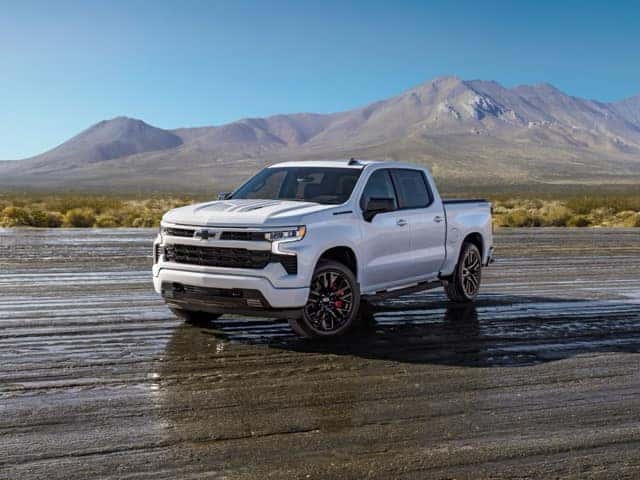 Which Chevy fits which driver
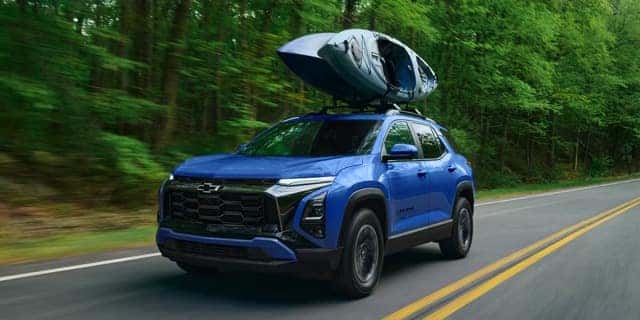
Equinox — the compact SUV that handles most families comfortably. It is the volume seller for good reason and typically the most competitive lease in the lineup.
Trax — smaller and more affordable, with strong fuel economy. Worth a look if your driving is mostly commuting and errands.
Trailblazer — sits between the two, adding some room without much footprint.
Silverado 1500 — leasing a truck makes sense if your usage is predictable and you are not putting extreme miles on it. If you tow heavily or run a work truck, financing usually suits better.
Traverse — the three-row option when you need genuine seating for seven.
When leasing fits, and when it does not
Leasing works if your annual mileage is predictable and moderate, you like being in a newer vehicle every few years, and you would rather stay inside factory warranty coverage than deal with out-of-warranty repairs.
It works less well if you drive high mileage, keep vehicles a long time, or want to modify the vehicle. Financing suits those cases.
Neither is smarter than the other. They solve different problems.
Questions to ask before signing
 Get clarity on the mileage allowance and per-mile overage rate, the disposition fee at lease end, what counts as excess wear, and whether gap coverage is included.
Gap coverage is worth confirming specifically. It covers the difference between what you owe and what the vehicle is worth if it is totaled. It is often included on a lease, but confirm rather than assume.
Also be careful about large down payments on a lease. Unlike a purchase, that money is at risk if the vehicle is totaled early.
Current programs
Manufacturer lease programs change monthly and vary by model, term and credit tier. Our new vehicle specials and lease and finance deals pages carry what is live now. You can also start a financing application to find out which programs you qualify for.
Frequently Asked Questions
Can I negotiate the price on a lease? Yes. Lowering the capitalized cost lowers your payment.
What if I go over my mileage? You pay a per-mile charge set in your contract. Buying miles up front is usually cheaper than paying overage later.
Can I buy the vehicle at lease end? Generally yes, at the purchase option price set when you signed.
Can I lease with a trade-in? Yes. Trade equity applies toward the capitalized cost.
Does leasing need better credit than financing? Lease programs typically have tighter requirements. Applying tells you where you stand.
Come see what is available at Team One Chevrolet of Gadsden.
0 comment(s) so far on Chevy Lease Deals Near Gadsden: Equinox, Silverado and Trax